7 min read
Clinical Case Study: Four Years of Chronic Calf Cramping and an Immediate Change Following Body Tempering
A clinical case study showing one patient’s experience with four years of reproducible calf cramping and the immediate changes observed after Body Tempering.

Muscle cramps are often associated with dehydration or electrolyte imbalances. While those factors can certainly contribute, they don’t explain every case.
This case highlights one patient’s experience with chronic calf cramping that had persisted for four years and the immediate changes observed following a body tempering session.
Like all case studies, this represents the experience of a single individual and should not be interpreted as evidence that everyone with calf cramps will experience the same results.
Patient History
The patient presented with a four-year history of chronic calf cramping affecting both legs.
What made his presentation particularly interesting was how easily the cramps could be reproduced. Simply asking him to gently point his toes downward, or plantar flex, caused both calves to cramp almost immediately.
Because his symptoms were so easy to reproduce, we had a straightforward way to compare his condition before and after treatment.
Initial Assessment
Before beginning treatment, the patient demonstrated the movement that consistently triggered his symptoms.
Right calf
Mild plantar flexion immediately produced a painful calf cramp.
Left calf
The same movement also caused a significant cramp. These findings established a baseline before treatment began.
Treatment
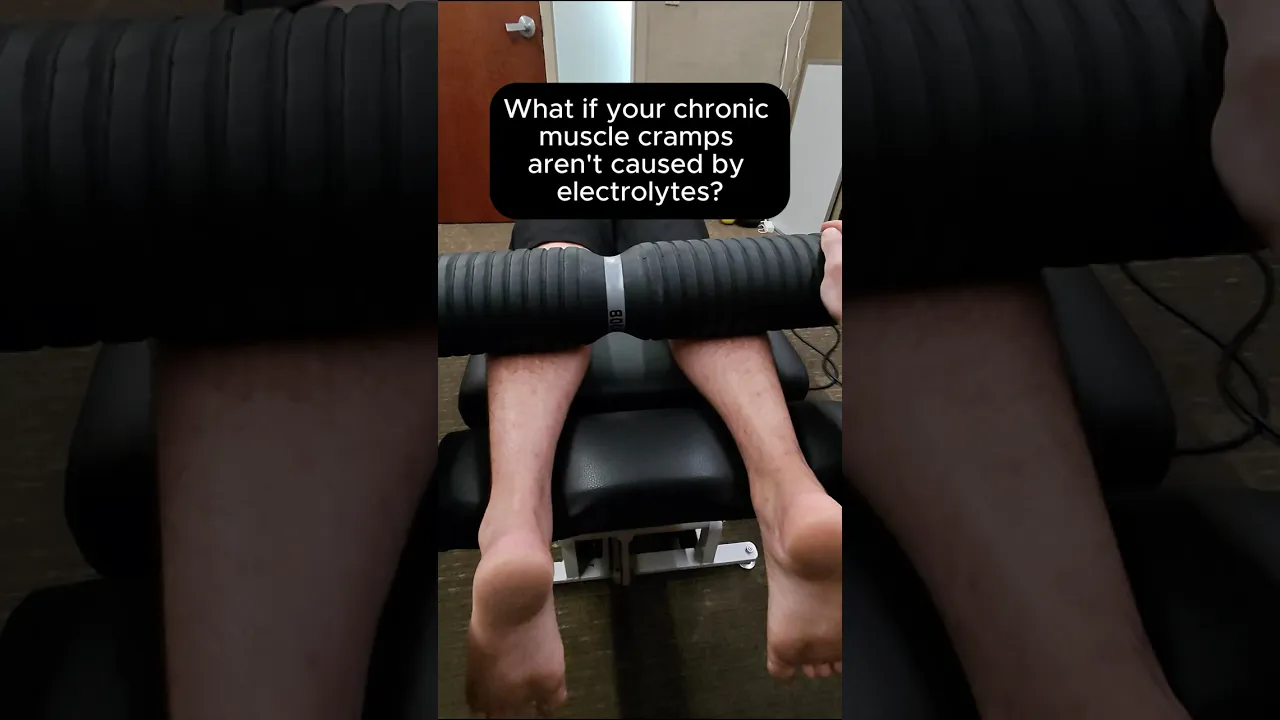
The treatment focused on body tempering of the calf musculature using progressive compression while monitoring the patient’s comfort throughout the session.
The video below highlights the calf portion of the treatment. As with many clinical visits, it does not include every aspect of the evaluation or the complete treatment session.
Immediate Results
Following treatment, the plantar flexion test was repeated.
Right calf
The patient was no longer able to reproduce a calf cramp by pointing his toes.
Left calf
The patient experienced a substantial improvement. Rather than producing a full calf cramp, he reported only a mild cramping sensation that had shifted toward the outside of his foot near the fifth toe.
Compared with the beginning of the session, both the intensity and location of his symptoms had changed.
Why Is This Interesting?
Many people assume persistent muscle cramps are always caused by dehydration or electrolyte deficiencies.
Those factors are certainly important and should not be ignored. However, this case demonstrates why it can be valuable to consider other contributing factors when symptoms persist despite traditional approaches.
One patient’s response does not prove why the improvement occurred, nor does it establish body tempering as the appropriate treatment for every individual with calf cramps. Instead, it highlights the importance of evaluating each person individually rather than assuming every case has the same underlying cause.
What Does the Research Say?
Research specifically examining body tempering is still emerging.
Studies investigating foam rolling and other compression-based soft tissue techniques have demonstrated temporary improvements in range of motion and reductions in perceived muscle stiffness. Whether body tempering produces similar effects — and for whom — continues to be an active area of investigation.
Additional research will help clarify which patients are most likely to benefit and how body tempering compares with other recovery strategies.
Key Clinical Takeaways
The patient had experienced reproducible calf cramps for approximately four years.
Mild plantar flexion consistently triggered cramping in both calves before treatment.
Following the body tempering session, the right calf no longer cramped during testing.
The left side improved from a full calf cramp to only a mild sensation localized near the outside of the foot.
This case represents the outcome of one individual and should not be generalized to all people with chronic calf cramps.
Could Body Tempering Be Right for You?
If you’ve been dealing with recurring muscle tightness or calf cramps that haven’t improved with stretching, hydration, or other self-care strategies, the next step may be a more comprehensive evaluation.
At your first visit, we’ll discuss your goals, review your history, perform a movement assessment, and determine whether body tempering may be an appropriate part of your care.
Every patient is different, and the best treatment plan begins with understanding your specific presentation rather than assuming every case has the same cause.
Have a question about whether this applies to you?
Request consultation