9 min read
Can Body Tempering Improve Your Movement? A Pilates Instructor’s Search for Better Movement
A Pilates instructor explores Body Tempering as a complementary soft-tissue tool for improving movement quality, restrictions, and how the body feels in motion.
You can be strong. You can be flexible. You can exercise regularly and spend a significant amount of time working on your mobility.
And you can still feel like something is missing.
For people who pay close attention to how they move, small restrictions can become especially noticeable. A movement may feel different from one side to the other. A particular muscle may always feel tight. Or you may have good mobility on paper but still feel like your body isn’t moving as freely or efficiently as you’d like.
That’s one of the reasons body tempering has become an interesting addition to movement-focused practices like Pilates, strength training, and athletic performance.
Recently, a Pilates instructor came in with a similar goal: to find a better way to work with his body and improve the way he moved. And that’s what led him to try body tempering.
What Is Body Tempering?
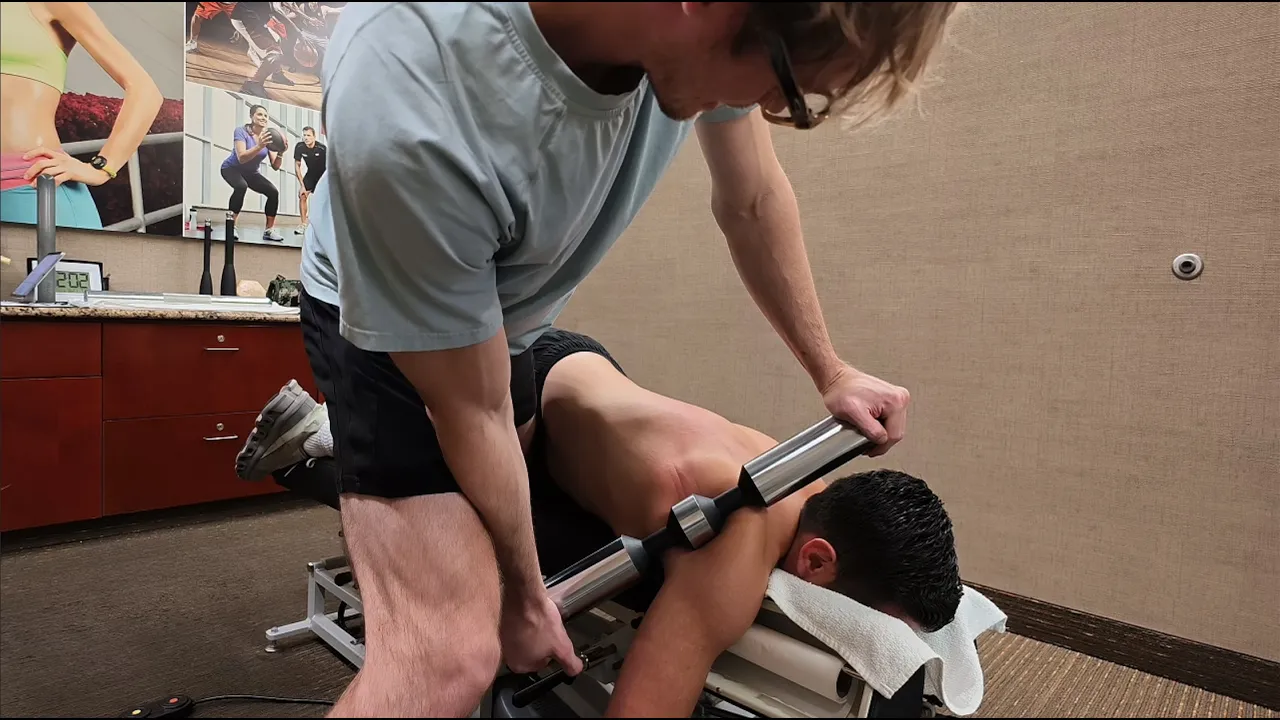
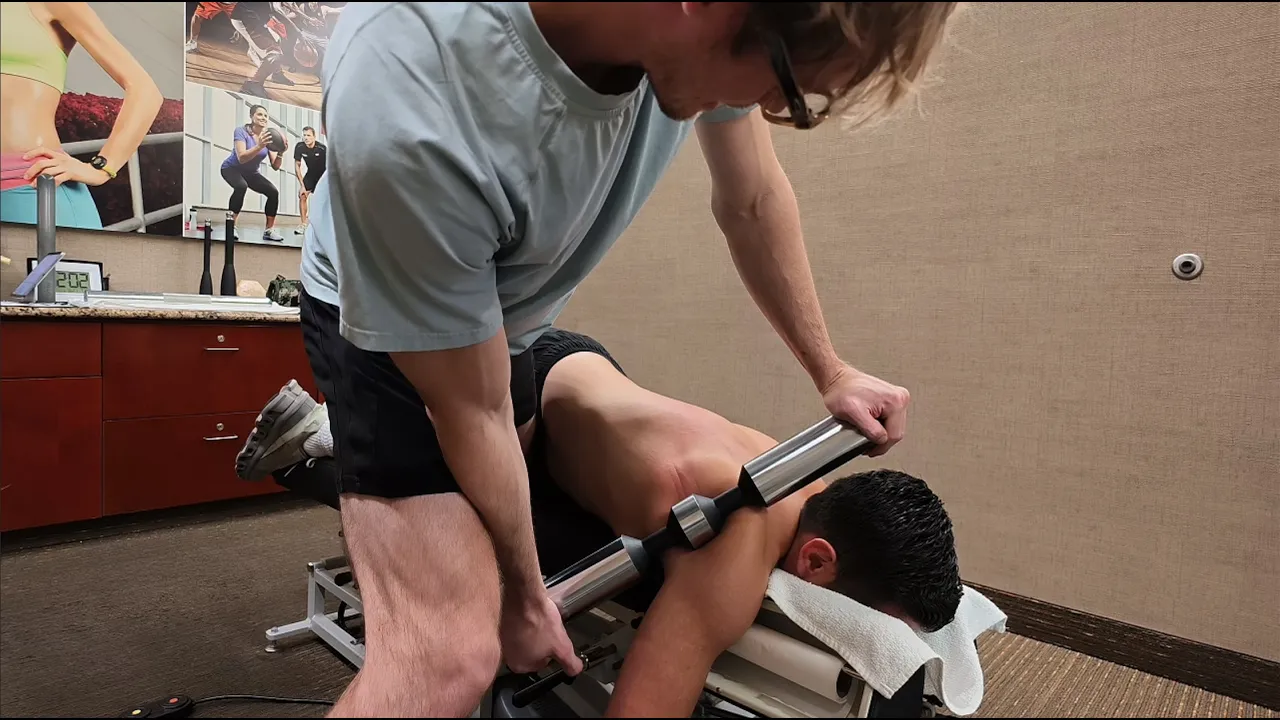
Body tempering is a soft-tissue technique that uses weighted tools to apply sustained pressure to the body.
Unlike traditional massage, where a practitioner may continuously move their hands across the tissue, body tempering uses the weight of a tool to create a more consistent pressure over a specific area.
The tools can be used in different ways depending on the area being treated and the goal of the session. The result is a very different experience from simply stretching or using a foam roller.
Instead of trying to force a muscle into a longer position, body tempering allows you to spend time applying pressure to the tissues themselves.
Why Would Someone Who Does Pilates Try Body Tempering?
Pilates is already heavily focused on movement quality. Pilates practitioners spend a tremendous amount of time working on body awareness, core control, stability, coordination, mobility, posture, and movement efficiency.
But there’s an important distinction between being able to perform a movement and feeling unrestricted while performing it.
You may have the strength and coordination to perform an exercise correctly while still noticing that a particular area feels restricted. That’s where complementary soft-tissue work can become useful.
Body tempering isn’t meant to replace Pilates, strength training, mobility work, or exercise. Instead, it can be another tool that you use alongside them.
Sometimes More Stretching Isn’t the Answer
When someone feels tight, the natural reaction is often to stretch. And stretching certainly has a place.
But tightness doesn’t always mean that a muscle simply needs to be stretched further. Sometimes what you perceive as tightness is related to how the surrounding tissues are moving, how you are loading the area, or how your body is responding to repeated stress.
That’s why simply stretching harder isn’t always the solution. Instead of asking, “How can I stretch this farther?” it can be useful to ask, “Why does this area feel restricted in the first place?”
That change in perspective is one of the reasons body tempering can be interesting for people who have already tried conventional mobility work.
What Does Body Tempering Feel Like?
This is one of the most common questions people have before trying it. The short answer is: it’s intense.
Body tempering uses significantly more pressure than many people are accustomed to experiencing from conventional soft-tissue techniques. But intense doesn’t have to mean aggressive.
The goal isn’t simply to see how much pressure someone can tolerate. Instead, the amount of pressure and the tool being used can be adjusted based on the person, the area being worked on, and the goal of the session.
Some areas may tolerate substantial pressure. Others require a much lighter approach. The objective is to find an appropriate level of stimulus — not simply to make the treatment as uncomfortable as possible.
A Pilates Instructor’s Experience With Body Tempering
That’s exactly what makes this experience interesting. The person featured in the video isn’t someone who was completely unfamiliar with movement. Quite the opposite.
As a Pilates instructor, he already had experience thinking about how the body moves and how different parts of the body work together. So rather than approaching body tempering as a replacement for exercise or movement training, he was able to experience it as another tool to complement the work he was already doing.
Watch his experience here:
The interesting part isn’t simply whether body tempering feels good. The bigger question is what happens when you combine targeted soft-tissue work with the movement practice you’re already doing.
Body Tempering and Movement
One of the reasons I like incorporating movement into soft-tissue work is that the body doesn’t exist in isolation. A muscle doesn’t operate by itself.
Your body is a connected system, and the way one area moves can influence how another area feels and performs. That’s why the goal of a body tempering session isn’t necessarily to make someone more flexible.
The goal is to help create an environment where they can move better. After working on an area, you can immediately follow it with movement and see how the body responds.
That might mean going through a familiar exercise, performing a mobility drill, practicing a squat, or simply moving through a range of motion that previously felt restricted. The movement gives you feedback.
Who Might Benefit From Body Tempering?
Body tempering can be particularly interesting for people who are already physically active and want another way to address areas that feel restricted or overworked.
Pilates practitioners and instructors
Weightlifters, runners, athletes, and CrossFit athletes
Recreational exercisers and people who regularly perform mobility work
Anyone who feels like certain areas consistently limit their movement
You don’t need to be an elite athlete to benefit from exploring different approaches to soft-tissue work. You simply need to have a reason for wanting to move better.
Body Tempering Isn’t About Keeping You on the Table
One of the things I appreciate most about movement-based care is that the treatment itself isn’t the end goal. The goal is what you are able to do afterward.
If you’re an athlete, that’s your training. If you’re a Pilates instructor, that’s your movement practice. If you’re a lifter, that’s your workout. If you’re simply trying to move without feeling restricted, that’s your everyday life.
Body tempering can be one part of that process. The intention isn’t to create a situation where you need someone to work on you forever. It’s to give you another tool that can potentially help you get more out of the activities you already care about.
Try Body Tempering in Houston
If you’ve already tried stretching, mobility exercises, foam rolling, or traditional soft-tissue work but still feel like certain areas aren’t moving the way you’d like, body tempering may be worth exploring.
At Body Tempering Houston, sessions are designed around your individual needs and the areas that are limiting your movement. Whether you’re a Pilates instructor, athlete, lifter, or simply someone who wants to move better, the goal is the same: find what’s limiting your movement, address it, and then see what your body can do with that additional freedom.
If you’re in the Houston area and want to experience body tempering for yourself, you can learn more and request a session below.
Book a Body Tempering Session
Learn More About Body Tempering
Frequently Asked Questions
Is body tempering the same as foam rolling?
No. Both involve applying pressure to soft tissue, but the tools and application are very different. Foam rolling generally involves moving your body over a relatively light and broad surface. Body tempering uses weighted tools to apply more sustained, targeted pressure.
Is body tempering supposed to hurt?
Body tempering can be intense, but more pressure isn’t automatically better. The appropriate intensity depends on the individual, the area being treated, and the goal of the session.
Can I do body tempering if I already do Pilates?
Yes. In fact, Pilates is a good example of a movement practice that can complement body tempering. The two approaches address different aspects of movement and can be used together.
Do I need to be an athlete to try body tempering?
No. Body tempering isn’t exclusively for athletes. Anyone interested in improving how they move or addressing areas that consistently feel restricted may be interested in trying it.
How often should I get body tempering?
There isn’t one schedule that works for everyone. Frequency depends on your activity level, goals, how your body responds, and what you’re trying to accomplish. The goal should be to use body tempering as a tool — not to become dependent on it.
About Body Tempering Houston
Body Tempering Houston provides specialized soft-tissue and body tempering services for people who want to move, train, and perform at their best.
Whether you’re looking for a new approach to soft-tissue work or simply want to see what body tempering feels like, a session can help you determine whether it’s a good fit for you.
Request a Body Tempering Session
Have a question about whether this applies to you?
Request appointment